




Safety Shoes Supplier in Dammam for Oil, Gas and Industrial Sites
Dammam and the wider Eastern Province of Saudi Arabia are important centres for oil and gas operations, petrochemical industries, manufacturing and industrial construction. Workers in these environments regularly operate around heavy machinery, pipelines, metal structures, industrial equipment and potentially hazardous materials.
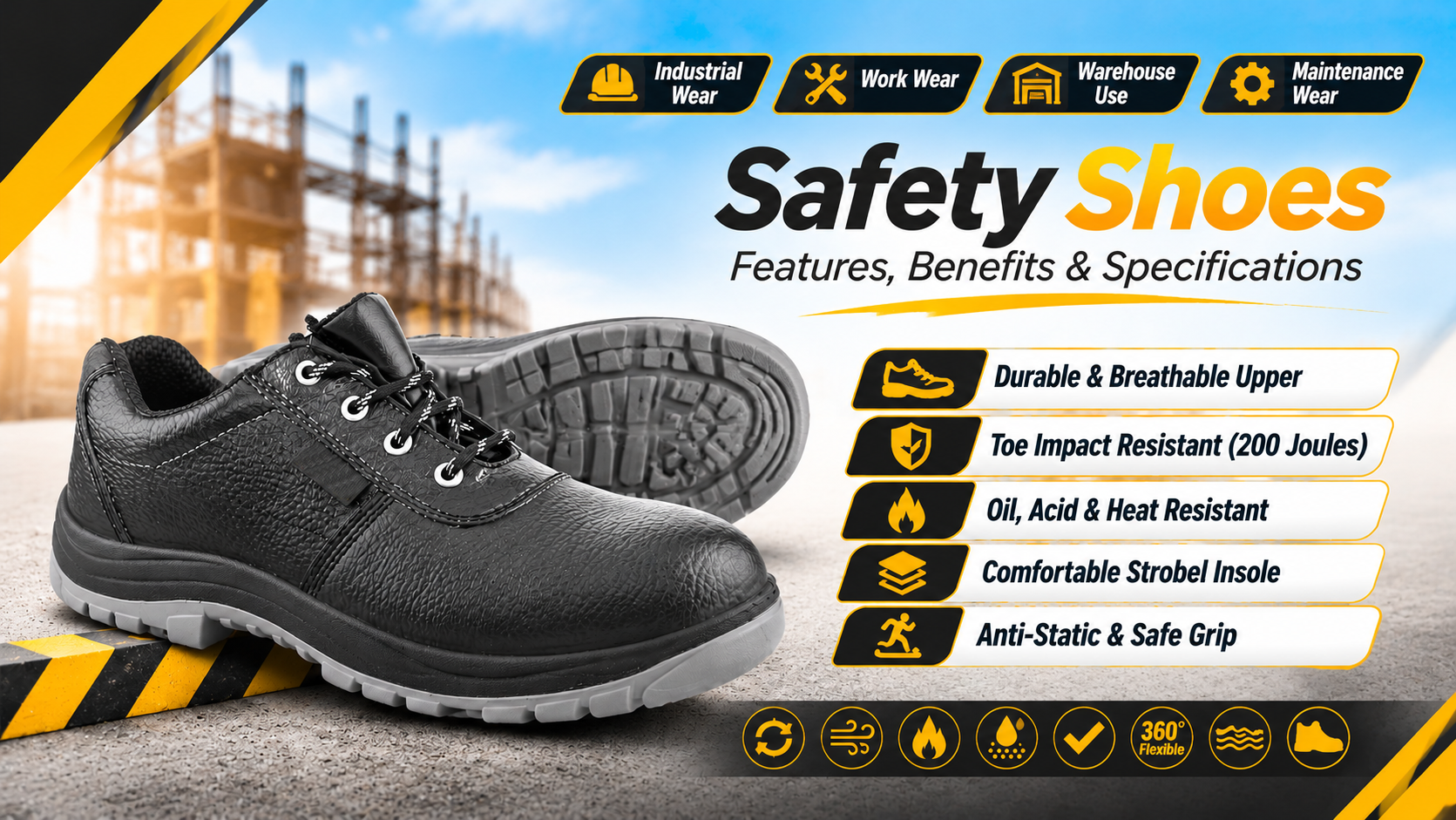
These working conditions require more than ordinary protective footwear. Industrial safety shoes must provide suitable protection against mechanical hazards, slipping, heat, electrostatic charge and other workplace risks.
Choosing the right footwear is particularly important for oil and gas facilities, refineries, fabrication workshops and industrial maintenance operations, where different tasks require different protection characteristics.
This guide explains the important features of industrial safety shoes, specialized footwear technologies and the factors businesses should consider when purchasing protective footwear in Dammam.
Industrial Workplace Hazards in Dammam and the Eastern Province
Different industrial operations expose workers to different hazards. Understanding these risks helps employers select appropriate protective footwear.
Oil and Gas Facilities
Oil and gas operations involve drilling equipment, pipelines, compressors, pumps and heavy machinery.
Workers may encounter:
- Falling tools and heavy equipment.
- Oil and lubricant spills.
- Sharp metal components.
- Hot industrial surfaces.
- Static electricity risks.
- Uneven working surfaces.
Footwear should provide suitable toe protection, outsole grip and other specialized properties according to the facility's safety assessment.
Petrochemical Plants and Refineries
Petrochemical facilities involve chemical processing, industrial heating systems, storage tanks and pressurized equipment.
Depending on the work area, employees may require footwear with:
- Antistatic properties.
- Suitable chemical resistance.
- Heat-resistant outsole construction.
- Slip-resistant performance.
- Protective toe caps.
- Durable materials suitable for industrial environments.
Chemical compatibility is particularly important. No single footwear material is resistant to every chemical, so manufacturers' chemical-resistance documentation should be checked before purchasing.
Metal Fabrication and Engineering Workshops
Fabrication workshops involve cutting, welding, grinding, metal handling and machinery operations.
Common footwear considerations include:
- Impact-resistant toe caps.
- Heat-resistant outsole properties.
- Puncture-resistant midsoles.
- Abrasion-resistant upper materials.
- Suitable traction on workshop floors.
Industrial Construction and Maintenance
Industrial construction and maintenance workers may encounter sharp debris, heavy materials, slippery surfaces and equipment-related hazards.
Suitable protective footwear should be selected according to the specific activities and workplace risk assessment.
Antistatic Safety Shoes: Why They Matter in Oil and Gas Industries
Electrostatic charge can accumulate on workers and clothing through movement, friction and contact with different materials.
In certain industrial environments, an uncontrolled electrostatic discharge may create a potential ignition hazard.
Antistatic safety footwear helps control the accumulation of electrostatic charge by providing a specified electrical resistance path between the wearer and the ground.
What Does the A Marking Mean?
The A marking under EN ISO 20345 identifies antistatic footwear.
These shoes are designed to provide controlled electrical resistance under specified testing conditions.
They may be considered for workplaces where static-charge control is required.
However, antistatic footwear does not independently make a worker safe in every explosive atmosphere. It must be used as part of the facility's complete electrostatic and ignition-control programme.
Antistatic vs ESD Safety Shoes
These terms are related but have different applications.
| Feature | Antistatic Footwear | ESD Footwear |
|---|---|---|
| Main purpose | Controls electrostatic charge accumulation | Controls electrostatic discharge |
| Application | Certain industrial environments | Electronics and ESD-protected workplaces |
| Main concern | Static accumulation and potential ignition risks | Protection of sensitive electronic components |
| Selection | Based on industrial risk assessment | Based on ESD programme requirements |
ESD footwear should be selected according to the applicable ESD standard and workplace programme. Antistatic footwear should not automatically be considered ESD-compliant.
Important: Antistatic footwear is not electrical insulating footwear and does not provide protection against electric shock. Eurostat - Eurostat+2
Heat-Resistant Safety Shoes for Industrial Environments
Workers in metalworking, fabrication, industrial maintenance and certain processing operations may encounter elevated temperatures.
The correct footwear depends on whether the hazard involves hot surfaces, radiant heat, hot materials or high ambient temperatures.
Two important footwear markings are HI and HRO.
HI – Heat Insulation
HI indicates heat insulation of the footwear's sole complex.
It is relevant when workers operate in environments where heat transfer through the outsole needs to be reduced.
HRO – Heat-Resistant Outsole
HRO identifies an outsole tested for resistance to hot contact.
Under the applicable EN ISO 20345 requirements, the outsole is tested at a contact temperature of 300°C for 60 seconds.
This marking does not mean the entire shoe can withstand unlimited exposure to heat or direct contact with molten materials.
HI vs HRO
| Feature | HI | HRO |
|---|---|---|
| Meaning | Heat insulation | Resistance to hot contact |
| Main function | Reduces heat transfer through the sole | Protects outsole against specified hot-contact exposure |
| Application | Certain hot working environments | Hot industrial surfaces |
| Selection | Depends on thermal exposure | Depends on hot-contact risk |
The two properties address different hazards and should not be treated as interchangeable. uvex safety+1
Oil and Fuel-Resistant Safety Shoe Outsoles
Oil, lubricants and fuel residues can affect footwear performance and workplace traction.
Workers in workshops, refineries and industrial maintenance areas may benefit from footwear with suitable outsole resistance.
Understanding FO Marking
FO identifies resistance of the outsole to fuel oil under the applicable footwear testing requirements.
It is useful to understand that FO does not mean the entire shoe is resistant to every industrial chemical.
For workplaces involving solvents, acids, alkalis or other aggressive substances, buyers should request specific chemical-resistance information from the manufacturer.
Important Outsole Considerations
Before purchasing industrial footwear, evaluate:
- Resistance to relevant oils and fuels.
- Slip-resistance performance.
- Outsole material and construction.
- Abrasion resistance.
- Suitability for the workplace floor.
- Manufacturer recommendations for chemical exposure.
Chemical-Resistant Safety Boots for Petrochemical Applications
Workers in chemical processing facilities may encounter substances that can damage conventional footwear materials.
Selecting chemical-resistant footwear requires identifying the actual substances involved.
Important considerations include:
Chemical Compatibility
Check whether the footwear material is compatible with the chemicals used in the facility.
Upper Material
Different materials offer different levels of resistance to chemical exposure, abrasion and environmental conditions.
Sole Construction
The outsole should be suitable for the working surface and expected exposure.
Boot Design
Some operations may require higher footwear coverage to reduce the possibility of liquid entering the footwear.
Manufacturer Documentation
Always request chemical compatibility charts, test documentation and manufacturer recommendations.
Chemical-resistant footwear should be selected according to the specific chemical exposure assessment rather than general product descriptions.
Understanding Important Industrial Safety Footwear Markings
Rather than choosing footwear based only on appearance, industrial procurement teams should understand the additional protection markings.
Under EN ISO 20345:2022, several supplementary markings identify specific footwear properties.
| Marking | Protection or property | Relevant application |
|---|---|---|
| A | Antistatic properties | Industrial environments requiring static-charge control |
| E | Energy absorption in the heel | Footwear cushioning requirements |
| FO | Outsole resistance to fuel oil | Workshops and fuel-exposed floors |
| HI | Heat insulation of sole complex | Certain hot working environments |
| HRO | Resistance to hot contact | Hot industrial surfaces |
| CI | Cold insulation | Cold working environments |
| WR | Water resistance of whole footwear | Wet working environments |
| WPA | Water penetration and absorption resistance of upper | Exposure to water |
| SR | Additional slip-resistance performance | Suitable slippery-floor applications |
| LG | Ladder grip | Work involving ladder climbing |
These markings are supplementary requirements, not interchangeable certifications. Their suitability depends on the specific workplace hazards. uvex safety+2
How to Select Safety Shoes for Different Industrial Applications
Not every industrial worker needs the same footwear specifications.
| Industrial application | Important footwear considerations |
|---|---|
| Oil and gas facilities | Antistatic properties, toe protection and suitable outsole resistance |
| Refineries | Site-specific electrostatic, chemical and thermal protection |
| Petrochemical plants | Chemical compatibility and protective toe caps |
| Metal fabrication | Heat-resistant outsole and impact protection |
| Industrial construction | Toe protection, grip and penetration resistance |
| Mechanical maintenance | Durability, grip and suitable oil resistance |
| Warehouses | Comfort, traction and toe protection |
Employers should consider the specific working environment, equipment and exposure risks before finalizing footwear specifications.
What Should Companies Check Before Purchasing Industrial Safety Shoes?
Industrial footwear procurement requires more than comparing prices and product appearance.
Consider the following factors before placing an order.
1. Product Certification
Check the applicable EN ISO 20345 certification and supporting technical documentation.
2. Workplace Compatibility
Ensure the selected footwear is suitable for the actual industrial hazards.
3. Material Quality
Evaluate the upper material, outsole construction, protective toe cap and stitching.
4. Employee Comfort
Consider cushioning, proper sizing, ventilation and footwear weight, especially for employees working long shifts.
5. Technical Documentation
Request product specifications, test information and relevant conformity documents.
6. Product Availability
Confirm that the required footwear models and sizes are available in the quantities needed.
Bulk Safety Shoe Procurement for Companies in Dammam
Oil and gas companies, refineries, manufacturing facilities and industrial contractors may require protective footwear for large workforces.
Bulk procurement should be planned around employee requirements and workplace safety specifications.
Before requesting quotations, prepare:
- Total number of pairs required.
- Employee shoe-size distribution.
- Required toe protection.
- Antistatic or ESD requirements, where applicable.
- Heat and chemical resistance requirements.
- Required product certifications.
- Delivery schedule.
- Replacement and after-sales requirements.
Providing these details helps suppliers recommend suitable footwear and makes it easier for procurement teams to compare quotations.
How to Find a Reliable Safety Shoes Supplier in Dammam
Choosing an appropriate supplier is important for maintaining consistent product quality and procurement efficiency.
Before selecting a safety footwear supplier, evaluate:
- Availability of certified industrial footwear.
- Different protective footwear categories.
- Product technical specifications.
- Bulk order capabilities.
- Size availability.
- Transparent quotation procedures.
- Delivery arrangements.
- After-sales support.
- Relevant conformity documentation.
For Saudi procurement, buyers should also verify applicable local conformity requirements. SASO provides technical regulations for footwear and personal protective equipment, along with relevant conformity services. saso.gov.sa+1
Frequently Asked Questions About Industrial Safety Shoes in Dammam
1. Which safety shoes are suitable for oil and gas workers?
Oil and gas workers may require protective footwear with suitable toe protection, antistatic properties, slip resistance and additional features depending on the operational hazards.
2. What does A mean in industrial safety shoes?
A indicates antistatic footwear under EN ISO 20345. It identifies footwear designed to provide controlled electrical resistance and help manage electrostatic charge accumulation.
3. Are antistatic and ESD safety shoes the same?
No. Antistatic footwear controls electrostatic charge accumulation, while ESD footwear is selected for controlled discharge in electrostatic-protected workplaces. The required specifications depend on the application.
4. What does HRO mean in safety footwear?
HRO indicates that the outsole has been tested for resistance to hot contact at 300°C for 60 seconds under the applicable standard.
5. Are FO-marked safety shoes suitable for chemical plants?
FO indicates outsole resistance to fuel oil. It does not guarantee resistance to all industrial chemicals. Chemical compatibility must be verified separately.
6. What type of footwear is suitable for refinery workers?
The selection depends on the refinery's risk assessment. Requirements may include toe protection, antistatic properties, suitable chemical resistance, heat protection and appropriate outsole grip.
7. Can companies purchase industrial safety shoes in bulk in Dammam?
Industrial suppliers may offer bulk procurement for factories, refineries, contractors and other businesses. Companies should confirm model availability, sizing, certification and delivery arrangements before ordering.
8. What documentation should companies request when purchasing safety footwear?
Companies should request product specifications, applicable certification details, test documentation and relevant Saudi conformity documents according to their procurement requirements.
Choose the Right Industrial Safety Footwear
Industrial workplaces across Dammam and the Eastern Province require careful consideration when selecting protective footwear.
From oil and gas facilities to petrochemical plants, fabrication workshops and industrial construction projects, safety shoes should match the actual hazards workers encounter.
Understanding antistatic properties, heat resistance, outsole performance and chemical compatibility helps businesses make more informed procurement decisions.
Contact OxyTech to discuss your industrial safety equipment requirements and procurement enquiries.