



Safety Shoes Supplier in Riyadh: Complete Buying Guide for Workers
Choosing the right safety shoes is essential for workers in construction, manufacturing, warehouses and other industrial environments. In Riyadh, where workplaces can involve high temperatures, heavy equipment and challenging working conditions, protective footwear plays an important role in workplace safety.
This guide explains different types of safety shoes, protection standards, important features and factors to consider when selecting industrial footwear for your workforce.
Why Are Safety Shoes Important in Industrial Workplaces?
Industrial workers are exposed to several workplace hazards, including falling objects, sharp materials, slippery surfaces and heavy machinery. Regular footwear may not provide sufficient protection against these risks.
Industrial safety shoes are designed to protect workers' feet while providing stability, durability and comfort during long working hours. Selecting appropriate footwear helps businesses improve workplace safety and meet applicable occupational safety requirements.
Types of Safety Shoes Available in Riyadh
1. Steel Toe Safety Shoes
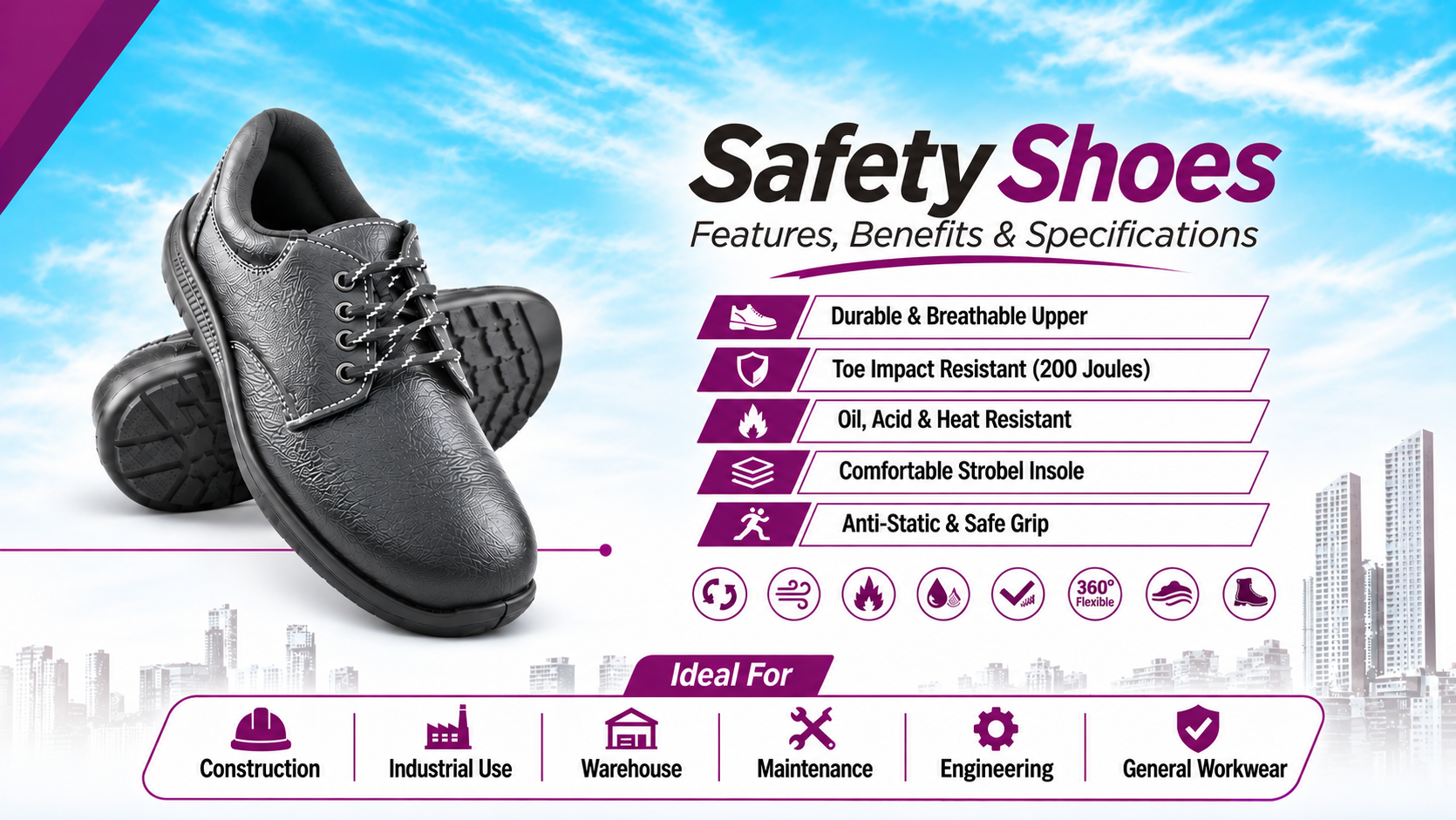
Steel toe safety shoes feature reinforced steel toe caps designed to protect against impact and compression hazards. They are commonly used in construction, manufacturing and heavy industrial operations.
2. Composite Toe Safety Shoes
Composite toe footwear uses non-metallic protective materials such as reinforced polymers and composites. These shoes can be suitable for workplaces where metal-free footwear is preferred.
3. Industrial Safety Boots
Industrial safety boots provide additional ankle coverage and are available with different protective features. They are commonly selected for construction, industrial maintenance and outdoor working environments.
4. Safety Trainers
Safety trainers combine a sporty design with protective footwear features. Depending on their certification and construction, they can be suitable for warehouses, logistics and light industrial environments.
Understanding Safety Shoe Standards and Certifications
Before purchasing industrial safety shoes, check their applicable certification and protective markings. EN ISO 20345 is an internationally recognized standard for safety footwear.
Common Safety Footwear Categories
- S1: Basic safety footwear with a protective toe cap and additional specified requirements.
- S1P: S1 footwear with penetration-resistant protection.
- S1PL and S1PS: Updated classifications with different penetration-resistance test requirements.
- S2: S1 requirements with specified water penetration and absorption resistance of the upper.
- S3: S2 requirements with penetration-resistant protection and specified outsole properties.
- S3L and S3S: Updated classifications with different penetration-resistance test requirements.
Other important markings may include SR for additional slip resistance, HRO for heat-resistant outsoles and ESD for electrostatic discharge properties.
Always verify the complete footwear specification and certification rather than relying on a single marking.
How to Choose Safety Shoes for Different Industries
Construction Industry
Construction workers may require protective toe caps, penetration-resistant midsoles and slip-resistant outsoles. The correct combination depends on the specific site hazards.
Warehousing and Logistics
Warehouse workers generally benefit from comfortable, lightweight footwear with appropriate toe protection and slip resistance, especially when walking or standing for extended periods.
Oil and Gas Industry
Oil and gas operations may require specialized footwear with suitable resistance to heat, oil, chemicals or other workplace hazards. Requirements should be assessed according to the working environment.
Manufacturing Facilities
Manufacturing workers may need protection against falling materials, sharp objects, machinery-related hazards and slippery floors. Footwear should be selected according to the facility's risk assessment.
Steel Toe vs Composite Toe Safety Shoes
| Feature | Steel Toe | Composite Toe |
|---|---|---|
| Material | Steel | Non-metallic materials |
| Weight | Generally heavier | Generally lighter |
| Metal detection | Usually detectable | Generally metal-free |
| Thermal properties | Conducts heat and cold | Generally lower thermal conductivity |
| Applications | General industrial protection | Metal-free environments and other suitable applications |
Both types can provide certified impact and compression protection. The best option depends on workplace requirements and the footwear's actual test certification.
Important Features to Check Before Buying Safety Shoes
- Protective toe cap: Check the impact and compression protection rating.
- Slip-resistant outsole: Select suitable footwear for the floor conditions in your workplace.
- Puncture resistance: Consider protective midsoles where sharp objects are a potential hazard.
- Heat resistance: Check outsole temperature resistance when workers operate in hot environments.
- Comfort and fit: Ensure adequate toe space, cushioning and proper sizing.
- Durability: Evaluate materials, stitching, outsole construction and expected working conditions.
How to Choose the Right Safety Shoe Size
Correct sizing is important for both comfort and workplace safety. Workers should try footwear with their usual work socks and ensure sufficient toe room without excessive movement inside the shoe.
For companies purchasing safety shoes in bulk, collecting individual employee sizes before placing an order can help reduce fitting issues and unnecessary exchanges.
How to Find a Reliable Safety Shoes Supplier in Riyadh
Choosing a reliable Safety Shoes Supplier in Riyadh is important for businesses that require consistent product quality and dependable procurement.
Before selecting a supplier in Riyadh, consider the following factors:
- Availability of certified safety footwear.
- Product specifications and technical documentation.
- Different footwear categories and size availability.
- Bulk order and corporate procurement support.
- Transparent pricing and quotation procedures.
- Delivery arrangements and product availability.
- After-sales support and replacement policies.
Businesses should verify product certifications and applicable Saudi conformity requirements before making procurement decisions.
Bulk Safety Shoe Orders for Companies in Riyadh
Construction companies, factories, warehouses and industrial contractors often purchase safety footwear in bulk to equip their workforce.
A planned procurement process helps businesses maintain consistent footwear specifications and manage employee requirements.
Before requesting a quotation, prepare the required shoe sizes, quantities, protective ratings, industry applications and delivery requirements. This makes it easier to compare supplier quotations and select suitable products.
Frequently Asked Questions About Safety Shoes in Riyadh
What type of safety shoes are suitable for construction workers?
Construction workers commonly require safety shoes with protective toe caps, slip-resistant outsoles and penetration-resistant protection where site hazards require it.
Are steel toe or composite toe safety shoes better?
Both can provide certified toe protection. Steel toe footwear is commonly used in general industrial applications, while composite toe footwear is useful where metal-free footwear or reduced weight is preferred.
What does S3 mean in safety shoes?
S3 is an EN ISO 20345 safety footwear classification that includes specified upper water resistance requirements, penetration resistance and outsole requirements. Check the applicable standard edition and product markings.
Can safety shoes be purchased in bulk in Riyadh?
Yes. Industrial suppliers may offer bulk procurement for companies, contractors, factories and warehouse operators. Confirm stock, size availability and product specifications before ordering.
How often should safety shoes be replaced?
Replacement depends on usage, workplace hazards, material condition and manufacturer recommendations. Damaged or compromised protective footwear should be removed from service.
What certifications should I check before purchasing safety shoes?
Check the applicable EN ISO 20345 certification, protective markings and relevant Saudi conformity documentation for the specific product.
Choose the Right Industrial Safety Footwear
Selecting suitable safety shoes requires an understanding of workplace hazards, footwear protection standards, comfort and product quality.
Whether you are purchasing footwear for construction workers, warehouse employees or industrial teams, prioritize certified products that match the actual working environment.
Contact OxyTech to discuss your industrial safety equipment requirements and product enquiries.