




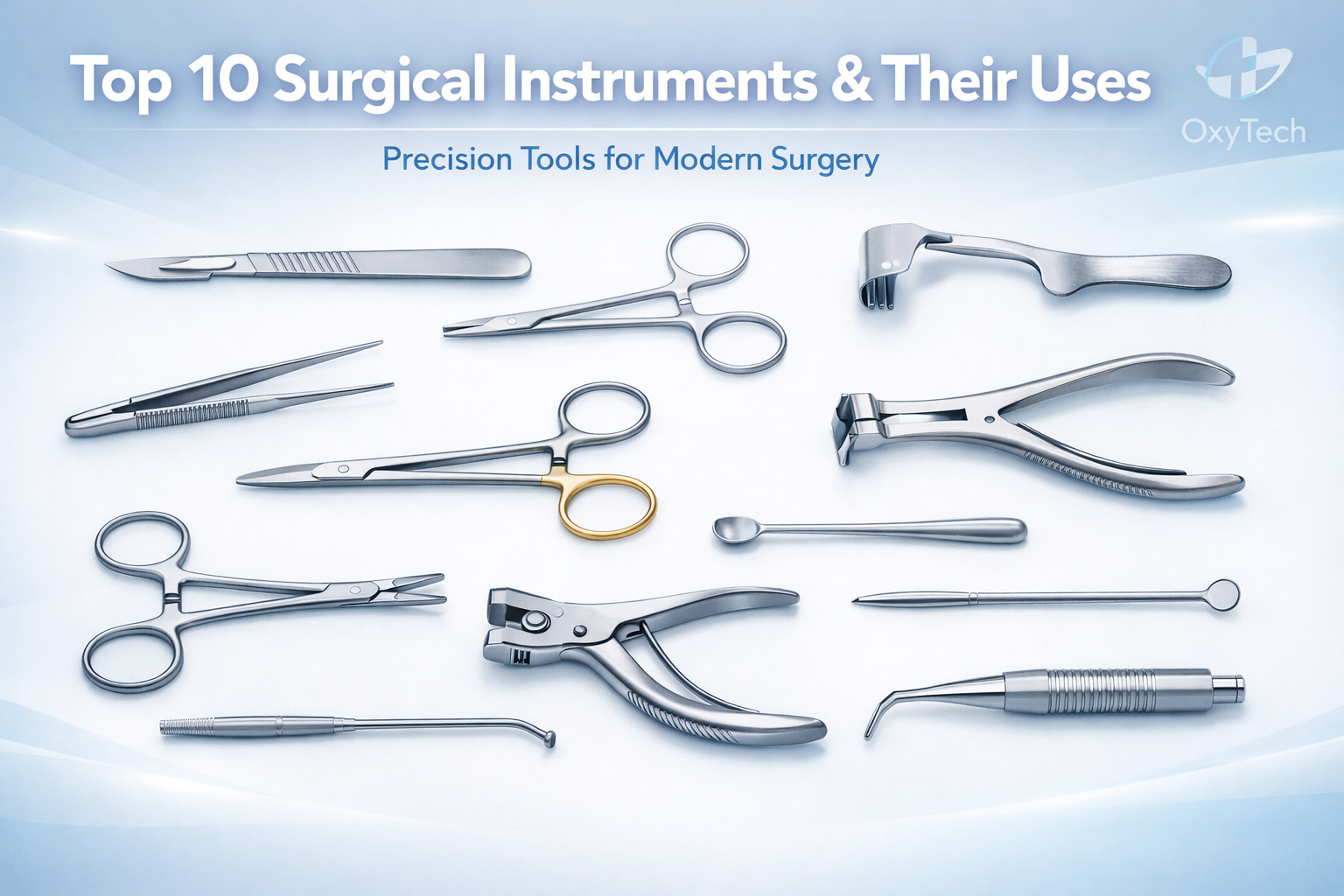
Top 10 Surgical Instruments and Their Uses
Surgical instruments form the backbone of modern healthcare, enabling precise procedures that save lives and improve patient outcomes. From scalpels that make the first incision to forceps that grip delicate tissues, these tools demand expertise and reliability. In this guide, we explore the Top 10 Surgical Instruments and their uses, helping medical professionals, students, and enthusiasts understand their critical roles.
Whether you're a surgeon preparing for the operating room or researching Surgical Instruments for your facility, knowing these essentials ensures efficiency and safety. We'll break down each tool's design, primary applications, and tips for maintenance, all backed by insights from global health standards.
Why Surgical Instruments Matter in Healthcare
Surgical instruments must meet rigorous standards for sterility, durability, and precision. According to the World Health Organization (WHO), poor-quality tools contribute to over 10% of surgical site infections worldwide. High-grade stainless steel or tungsten carbide construction prevents corrosion and breakage during use.
Key factors for selecting surgical instruments:
- Material quality: Resists rust and withstands autoclave sterilization.
- Ergonomics: Reduces surgeon fatigue in long procedures.
- Compliance: Meets FDA or ISO 13485 certifications.
Reputable Surgical Instruments Suppliers prioritize these features, supplying tools trusted in hospitals across Dubai and Saudi Arabia.
1. Scalpel: The Precision Cutting Tool
The scalpel tops our list of surgical instruments for its unmatched cutting accuracy. This handheld blade, often disposable or with interchangeable handles, slices through skin, muscle, and organs with minimal trauma.
Primary uses:
- Incisions in general surgery, orthopedics, and neurosurgery.
- Tissue dissection during biopsies.
Scalpels come in #10 (broad curve for skin) or #15 (fine point for precision) blades. Surgeons pair them with handles like #3 or #7 for optimal grip. Fun fact: Ancient scalpels were obsidian-edged—today's versions reduce healing time by 30%, per studies in the Journal of Surgical Research.
Pro tip: Always use a blade remover to avoid injuries.
2. Forceps: Gripping and Holding Essentials
Forceps, or "tweezers on steroids," rank high among surgical instruments for tissue manipulation. Toothed varieties grasp securely, while smooth ones handle fragile vessels.
Common types and uses:
| Type | Key Features | Primary Uses |
|---|---|---|
| Adson | Fine teeth, ratcheted | Skin retraction, suturing |
| Kelly | Straight, curved options | Clamping vessels, deep tissues |
| Debakey | Atraumatic, longitudinal teeth | Vascular surgery, heart procedures |
In cardiovascular ops, Debakey forceps prevent vessel slippage, cutting complication rates. WHO guidelines emphasize ratcheted designs for steady control.
3. Scissors: Cutting Sutures and Tissues
Surgical scissors are versatile surgical instruments designed for clean cuts without crushing. Mayo scissors tackle tough tissues; Metzenbaum handles delicate ones.
Uses by type:
- Mayo: Heavy-duty for muscle, fascia.
- Metzenbaum: Curved for undermining skin.
- Iris: Micro-surgery on eyes or nerves.
These tools feature tungsten carbide inserts for sharpness retention—up to 10x longer than steel alone. In plastic surgery, precise scissor work minimizes scarring.
Maintenance note: Sharpen annually to avoid jagged edges.
4. Needle Holders: Securing Stitches
No suture set is complete without needle holders, essential surgical instruments for driving needles through tissue. Their ratcheted jaws lock firmly, reducing hand strain.
Top variants:
- Mayo-Hegar: Tungsten carbide tips for heavy sutures.
- Olsen-Hegar: Built-in scissors for efficiency.
In orthopedic repairs, these holders manage thick sutures on tendons. FDA data shows ergonomic designs lower repetitive strain injuries by 25% among surgeons.
Best practice: Match jaw texture to suture size—smooth for fine work, serrated for coarse.
5. Retractors: Exposing the Surgical Field
Retractors hold back tissues, organs, or bones, making them indispensable surgical instruments for visibility. Handheld or self-retaining types free up assistants.
Popular options:
- Weitlaner: Self-retaining, sharp prongs for muscle.
- Gelpi: Delicate, ratcheted for spine or neuro.
- Deaver: Handheld for abdominal organs.
During laparotomies, retractors expand the field by 40%, per surgical ergonomics research. In minimally invasive surgery, fiber-optic versions enhance lighting.
6. Clamps/Hemostats: Controlling Bleeding
Hemostats (or hemostatic clamps) are vital surgical instruments for vessel occlusion and bleeding control. Kelly and mosquito styles dominate.
Key applications:
- Temporary vessel clamping before ligation.
- Tissue grasping in trauma surgery.
Curved mosquito hemostats access tight spaces; straight Kellys handle larger vessels. Coated versions minimize endothelial damage in vascular cases, aligning with American College of Surgeons protocols.
Caution: Prolonged clamping risks ischemia—limit to 20-30 minutes.
7. Bone Rongeurs and Cutters: Orthopedic Powerhouses
For bone work, rongeurs and cutters lead surgical instruments in orthopedics. Rongeurs nibble bone; Kerrison punches remove lamina in spine surgery.
Uses:
- Leksell rongeur: Double-action jaws for spinal decompression.
- Pittsburg cutter: Heavy bone trimming in fractures.
These tools feature double-action springs for rapid removal, reducing op time. Studies in Spine Journal note 15% faster procedures with ergonomic handles.
8. Curettes: Scraping and Debridement
Curettes are spoon-shaped surgical instruments for scraping tissues or foreign material. Volkmann (straight) and Mclvor (angled) suit different depths.
Primary roles:
- Wound debridement to remove necrotic tissue.
- D&C procedures in gynecology.
- Ear/nose/throat polyp removal.
Ring curettes circle lesions cleanly. Infection control improves with sharp edges—sterilize via steam autoclave at 132°C.
9. Probes and Elevators: Exploration and Separation
Probes measure depths or detect calculi, while elevators lift periosteum or flaps. Periosteal elevators like Freer top surgical instruments for ENT and plastics.
Functions:
- Maloney probe: Esophageal dilation.
- Joseph elevator: Nasal hump reduction.
Malleable designs adapt to anatomy, preventing trauma. In dental surgery, they separate flaps atraumatically.
10. Suction Tips (Yankauer and Frazier): Clearing Fluids
Suction instruments remove blood, fluids, or debris, ranking essential among surgical instruments. Yankauer (wide tip) clears cavities; Frazier (fine) suctions neuro spaces.
Uses:
- Yankauer: Abdominal, thoracic cavities.
- Pool suction: Large volume in orthopedics.
Vacuum-regulated tips prevent tissue aspiration. Per CDC guidelines, single-use options cut cross-infection risks.
How to Choose and Maintain Surgical Instruments
Selecting top surgical instruments involves assessing procedure type, surgeon preference, and supplier reliability. Look for modular sets for versatility.
Maintenance checklist:
- Clean immediately post-use with enzymatic sprays.
- Autoclave at 121-134°C; avoid harsh chemicals.
- Inspect for wear—lubricate ratchets with silicone.
- Store in ventilated cases to prevent moisture.
Regular certification ensures longevity, with quality tools lasting 5-10 years.
Innovations in Surgical Instruments
Robotic-assisted surgical instruments, like da Vinci systems, integrate AI for tremor-free precision. Disposable single-use options reduce infection rates by 50%, per recent Lancet studies. Nano-coatings repel fluids, enhancing sterilization.
In the Middle East, demand surges for ergonomic designs amid rising minimally invasive surgeries.
Common Mistakes with Surgical Instruments
- Over-tightening ratchets, causing jaw damage.
- Mixing metals in sets, leading to galvanic corrosion.
- Skipping passivation post-manufacture.
Training via simulation cuts errors by 40%, notes Surgical Innovation journal.
FAQs on Surgical Instruments
What are the most common surgical instruments?
Scalpels, forceps, and scissors form the core trio.
How to sterilize surgical instruments?
Use autoclaving, chemical vapor, or ethylene oxide per CDC protocols.
Difference between hemostats and forceps?
Hemostats clamp vessels; forceps grasp tissues.
Are disposable surgical instruments better?
They minimize infections but cost more long-term.
Conclusion: Elevate Your Surgical Practice
Mastering these Top 10 Surgical Instruments and their uses empowers safer, faster procedures. Invest in quality from trusted sources to optimize outcomes. For premium selections tailored to high-volume hospitals, explore Surgical Instruments Suppliers OxyTech.