




ICU Room Equipment List: Complete Guide for Critical Care 2026
Intensive Care Units (ICUs) rely on specialized equipment to monitor and sustain critically ill patients. This article details the essential ICU room equipment list, highlighting key devices, their functions, and best practices for critical care.
Core Monitoring Devices
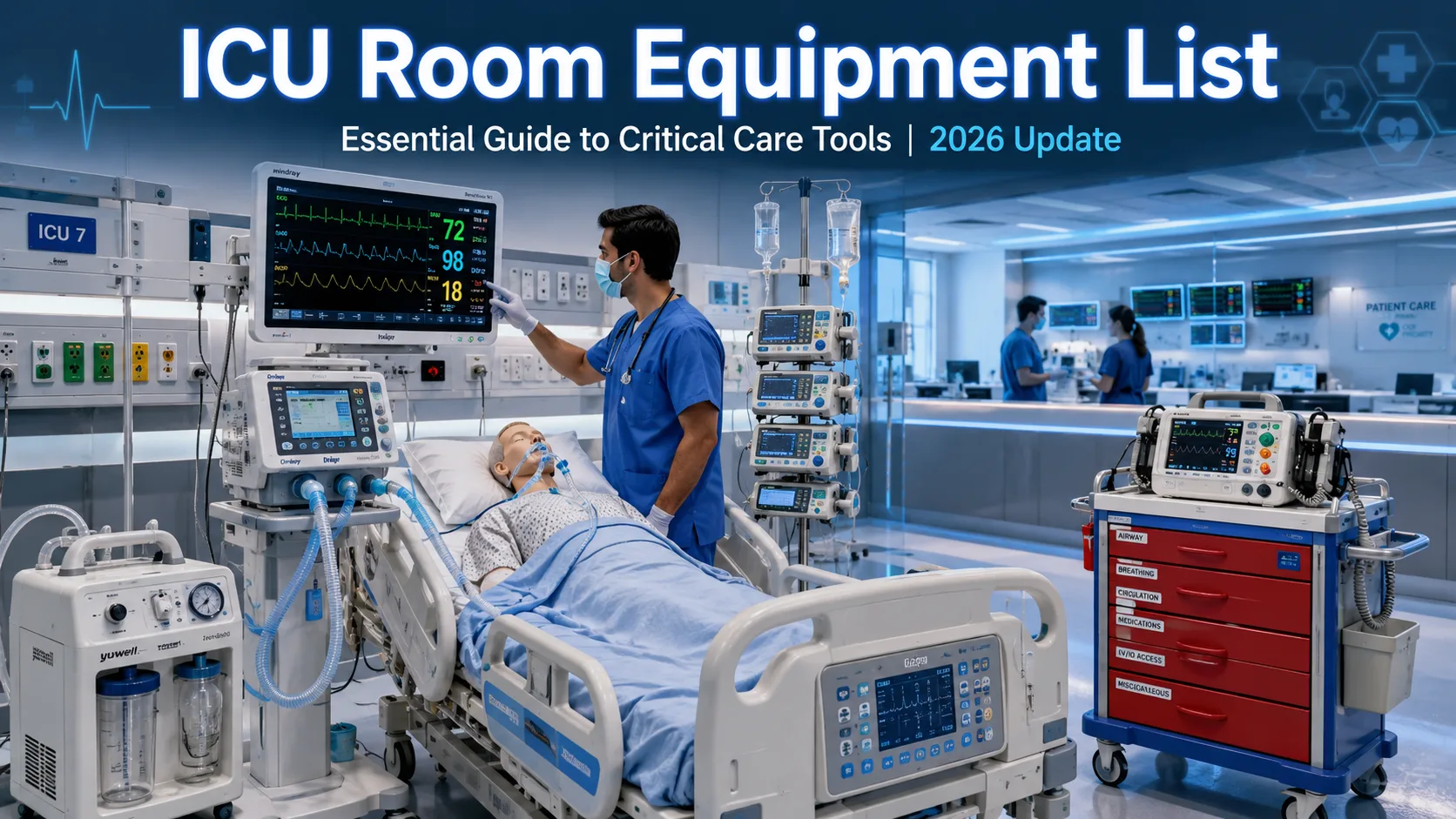
Patient monitors form the backbone of ICU surveillance, tracking vital signs in real-time. Multi-parameter monitors display heart rate, blood pressure, oxygen saturation (SpO2), respiratory rate, and temperature, alerting staff to deteriorations.
ECG machines and cardiac monitors detect arrhythmias, while continuous pulse oximeters ensure oxygenation levels. Noninvasive blood pressure cuffs provide frequent readings without invasive lines.
Central monitoring stations consolidate data from multiple beds, enabling oversight of several patients simultaneously.
Life Support Systems
Mechanical ventilators support breathing for patients with respiratory failure, offering modes like volume-controlled or pressure support ventilation. Every ICU bed requires a full-featured unit for conditions such as ARDS or pneumonia.
Infusion and syringe pumps deliver precise doses of medications, fluids, or nutrition intravenously, preventing errors in high-stakes dosing.
Defibrillators, often with pacing capabilities, deliver shocks for cardiac arrest, integrated with ECG for guided use.
Airway and Respiratory Tools
Suction machines clear airways of secretions, mucus, or blood, available in electric, foot-operated, or portable models. Nebulizers aerosolize medications for lung delivery.
AMBU bags and laryngoscopes aid manual ventilation and intubation. Portable ventilators support transport.
CPAP and BiPAP machines provide noninvasive respiratory support.
Beds and Furniture
Motorized ICU beds feature adjustable heights, Trendelenburg positions, and side rails for safe repositioning. Manual four-section beds serve as backups.
Patient stretchers and wheelchairs facilitate movement. Refrigerators store blood products and medications.
Diagnostic Equipment
Arterial Blood Gas (ABG) analyzers measure pH, oxygen, and CO2 for ventilator adjustments. Portable ultrasound and X-ray machines enable bedside imaging.
ECG 12-channel machines record detailed heart tracings. Glucometers monitor blood sugar rapidly.
Ophthalmoscopes and otoscopes support eye and ear exams.
Renal and Fluid Management
Hemodialysis and CRRT machines treat acute kidney injury, removing waste continuously for unstable patients. Dialyzer reprocessors ensure reuse efficiency.
Blood and fluid warmers prevent hypothermia during transfusions.
Emergency and Support Gear
Resuscitation carts stock drugs, airways, and tools for codes. UPS systems and backup generators maintain power.
Oxygen ports, radiant warmers, and weighing scales complete setups.
| Equipment Category | Key Items | Primary Function | Typical Quantity per ICU Bed |
|---|---|---|---|
| Monitoring | Multi-parameter monitor, Pulse oximeter, ECG | Vital signs tracking | 1 monitor, continuous oximeter |
| Ventilation | Mechanical ventilator, Suction machine | Breathing support, airway clearance | 1 ventilator, 1-2 suction units |
| Infusion | Infusion pump, Syringe pump | Precise drug delivery | 2-4 pumps |
| Emergency | Defibrillator, AMBU bag | Cardiac resuscitation | 1 shared defibrillator, 1 bag |
| Diagnostic | ABG analyzer, Portable X-ray | Lab and imaging tests | Shared, on-demand |
| Beds | Motorized ICU bed | Patient positioning | 1 per bed |
Advanced Features Explained
Modern patient monitors integrate AI for predictive alerts on sepsis or deterioration. Ventilators now include lung-protective strategies with auto-weaning protocols.
Infusion pumps feature drug libraries to prevent overrides. Defibrillators offer biphasic waveforms for higher success rates.
ICU beds incorporate weigh scales and CPR release buttons.
Maintenance Best Practices
Daily checks ensure equipment functionality; annual servicing by certified technicians complies with standards. Biomedical engineers calibrate monitors and ventilators quarterly.
Inventory lists like those from hospital specs track assets, including spares for pumps and batteries.
Setting Up an ICU Room
A standard ICU room needs one bed, one ventilator, one monitor, two infusion pumps, suction, and access to shared diagnostics. Space for 10-15 sqm per bed supports workflow.
Central oxygen, suction ports, and nurse stations optimize care.
Cost Considerations
Basic setups cost $100,000-$500,000 per bed, varying by technology level. High-end monitors run $20,000 each; ventilators $50,000+.
Bulk procurement and leasing reduce expenses for Indian hospitals.
Future Trends in ICU Tech
By 2026, telemedicine integration allows remote monitoring. Wearables and AI analytics predict outcomes, reducing alarms by 30%.
Portable labs and robotic assistants streamline diagnostics.
This comprehensive ICU room equipment list equips healthcare providers for effective critical care. Proper selection and maintenance save lives daily.
Also Follow Us: Facebook, Instagram