




Bandage Scissors: Uses, Types, and Benefits in Medical Care
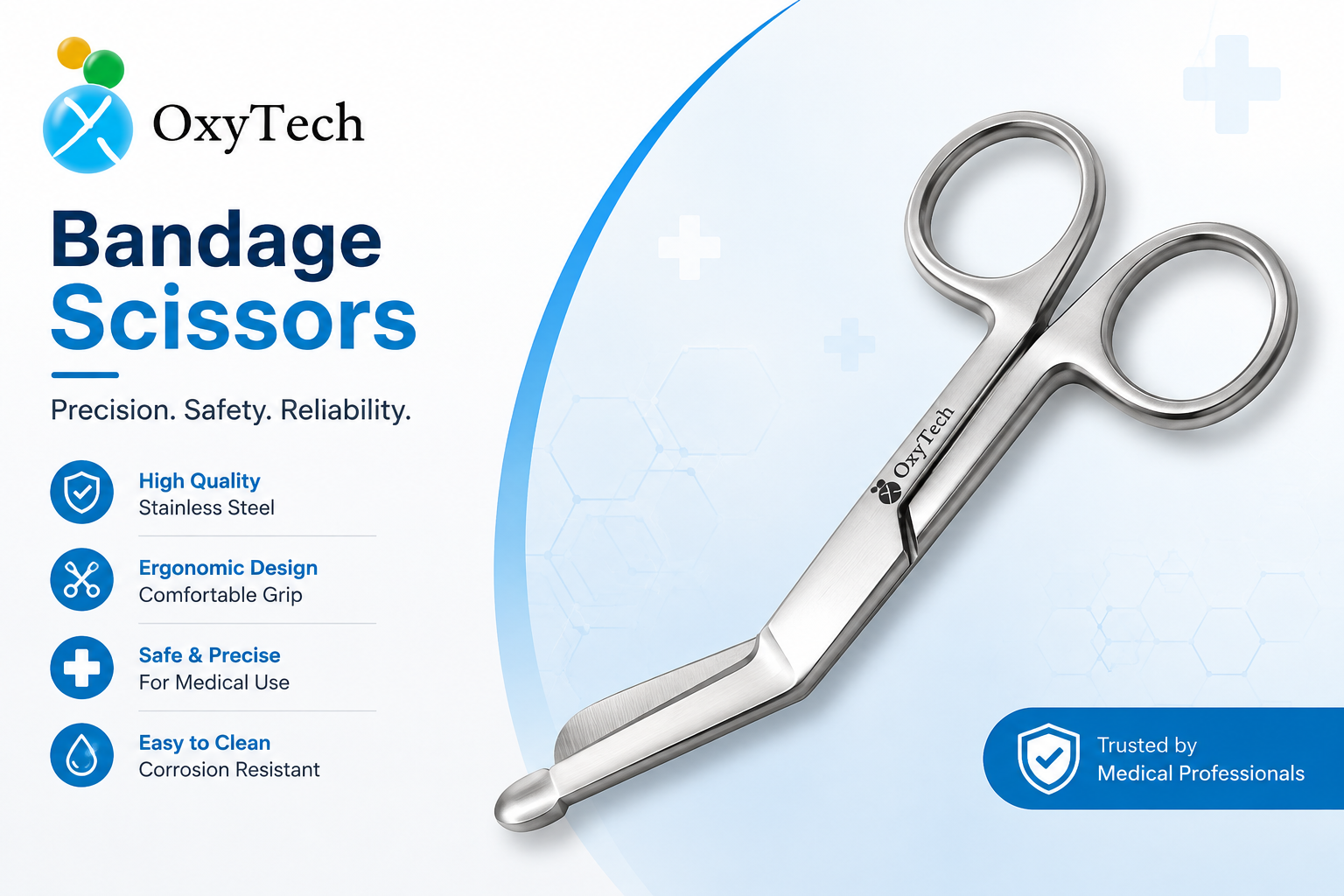
Bandage scissors are specialized medical cutting instruments engineered with an angled blade configuration and a rounded, blunt lower tip designed to cut dressings, medical tapes, and clothing without causing secondary skin injury to the patient. They are an indispensable tool across acute care departments, surgical suites, outpatient dressing rooms, and emergency medical response teams, providing safe, efficient, and reliable material sectioning during wound management.
Understanding Bandage Scissors in Healthcare
Bandage scissors, frequently identified as Lister scissors after the surgical pioneer Joseph Lister, represent one of the most widely used manual instruments in medical environments. The core design addresses a universal clinical challenge: removing tightly applied, adhering, or compressive dressings from delicate or damaged tissue without puncturing the skin.
The primary engineering distinction of bandage scissors lies in their angled shank and blade orientation. The cutting head is typically offset at an angle between 30 and 45 degrees relative to the finger rings and handle. This offset geometry allows healthcare practitioners to slide the blade beneath snug dressings while keeping their hands, fingers, and knuckles elevated above the patient's body. As a result, the tool provides unobstructed visual clarity over the cutting line while maintaining a neutral, comfortable wrist position.
The lower blade of a standard bandage scissor features an enlarged, smooth, rounded probe tip or nodule. When the instrument is engaged, this blunt nodule glides gently along the patient's epidermis, lifting the gauze, elastic bandage, or garment away from the underlying tissue. This configuration prevents accidental cuts, punctures, or abrasions, which is critical when managing pediatric patients, elderly individuals with friable skin, or trauma patients presenting with severe localized swelling. The upper blade is ground with a sharp, straight cutting edge that closes flush against the lower blade to slice cleanly through multi-layered medical textiles.
Key Clinical Uses and Applications
The clinical versatility of bandage scissors makes them standard equipment across numerous inpatient and outpatient medical procedures.
- Dressing and wrap removal: Safely cutting through circumferential gauze wraps, high-compression elastic bandages, tubular netting, and cohesive flexible bandages without applying pressure to sensitive wound beds.
- Dressing customization and sizing: Trimming sterile non-adherent pads, hydrocolloid sheets, alginate ribbons, silicone foams, and woven gauze sponges to match the exact contours of an anatomical site before application.
- Emergency clothing removal: Rapidly cutting through tough denim, leather outerwear, uniforms, sports gear, and footwear during trauma evaluations to expose injury zones, severe hemorrhage, or compound fractures.
- Orthopedic cast and splint preparation: Trimming soft tubular stockinettes, synthetic undercast padding, and plaster-impregnated bandages during immobilization procedures or prior to bivalving rigid casts.
- Securing tape and tube management: Sectioning heavy-duty adhesive tapes, surgical cloth tapes, and silicone fixation strips used to stabilize endotracheal tubes, intravenous lines, urinary catheters, and wound drainage systems.
- Sterile packaging and drape modification: Opening sterile medical packaging, cutting non-tissue procedural drapes, and adjusting operative barrier sheets without dulling delicate micro-surgical cutting tools.
Types of Bandage Scissors
Different clinical situations demand specific blade profiles, handle constructions, and material grades to handle textiles of varying thickness and toughness.
| Instrument Type | Blade Structure | Standard Length Range | Primary Materials Cut | Common Healthcare Setting |
|---|---|---|---|---|
| Standard Lister Scissors | Smooth angled blades with a blunt lower safety nodule | 4.5 in to 8.0 in (11.5 cm to 20 cm) | Gauze, standard tapes, cotton rolls, elastic bandages | General hospital wards, outpatient clinics, home health |
| Heavy-Duty Trauma Shears | Milled serrated lower edge, high-leverage plastic handles | 7.25 in (18.5 cm) | Heavy clothing, leather belts, denim, synthetic outerwear | Emergency medical services, trauma resuscitation bays, triage |
| Hi-Level Utility Scissors | Steep 60-degree blade angulation with extended shanks | 5.5 in to 7.5 in (14 cm to 19 cm) | Dense cast padding, multiple drape layers, thick plaster wraps | Orthopedic departments, plaster rooms, operating rooms |
| Micro-Lister Scissors | Compact, delicate angled blades with a fine probe tip | 3.5 in to 4.0 in (9 cm to 10 cm) | Fine facial dressings, pediatric wraps, ophthalmic tapes | Pediatrics, dermatology clinics, plastic and reconstructive surgery |
| Tungsten Carbide Lister | Gold-plated finger rings with hardened carbide blade inserts | 5.5 in to 7.0 in (14 cm to 18 cm) | High-volume repetitive cutting of dense composite dressings | Surgical dressing clinics, dedicated wound care centers |
| Color-Coded Utility Scissors | Fluoropolymer-coated steel blades with colored plastic grips | 5.5 in to 7.5 in (14 cm to 19 cm) | Departmental sorting, routine ward dressings, first-aid packs | Nursing stations, triage areas, mobile paramedic bags |
Core Benefits in Medical Practice
Integrating dedicated bandage scissors into patient care workflows delivers significant safety, mechanical, and operational advantages.
First, these scissors provide reliable tissue protection. Patients requiring ongoing wound management often have compromised skin integrity due to advanced age, chronic venous disease, diabetes, or long-term steroid therapy. Using pointed or straight household scissors near these fragile tissue areas carries a severe risk of accidental skin tears and punctures. The blunt lower foot of a bandage scissor eliminates this hazard, allowing practitioners to work quickly around delicate skin margins.
Second, the structural ergonomics reduce hand strain while maximizing cutting leverage. The angled configuration allows the operator to maintain full contact and shear force along the entire length of the blade without contorting their wrist or elbow. This design provides steady control when cutting through thick, multi-layered compression systems, reducing physical fatigue during repetitive dressing change rounds.
Third, high-grade instrument construction supports infection prevention and institutional durability. Reusable surgical-grade stainless steel scissors tolerate repeated high-pressure steam autoclaving, chemical immersion, and ultrasonic cleaning cycles without corroding or dulling. Selecting high-grade, reusable instruments ensures compliance with clinical hygiene standards and lowers replacement costs over time.
Selection and Maintenance Best Practices
Proper instrument selection, routine inspection, and standardized decontamination protocols ensure long-term cutting performance and patient safety.
- Material grading: Select scissors manufactured from surgical-grade AISI 410 or 420 martensitic stainless steel for high corrosion resistance, or choose tungsten carbide inserts for high-demand clinical environments.
- Size matching: Equip bedside nursing staff with versatile 5.5-inch Lister models, place 7.25-inch trauma shears in emergency response kits, and reserve 3.5-inch micro models for neonatal and pediatric wards.
- Decontamination workflow: Rinse instruments immediately after contact with biological fluids, clean with an enzymatic detergent in an ultrasonic bath, and sterilize in a steam autoclave between 134°C and 137°C according to protocol.
- Structural inspection: Routinely check the central hinge screw for looseness, rust, or lateral movement, and apply an approved water-soluble instrument lubricant after cleaning to preserve fluid mechanical action.
- Sharpness verification: Test cutting efficacy by sectioning through several layers of dry medical gauze; if the blades drag, crush, or fold the material instead of cutting cleanly, the scissor should be sharpened or retired from service.