



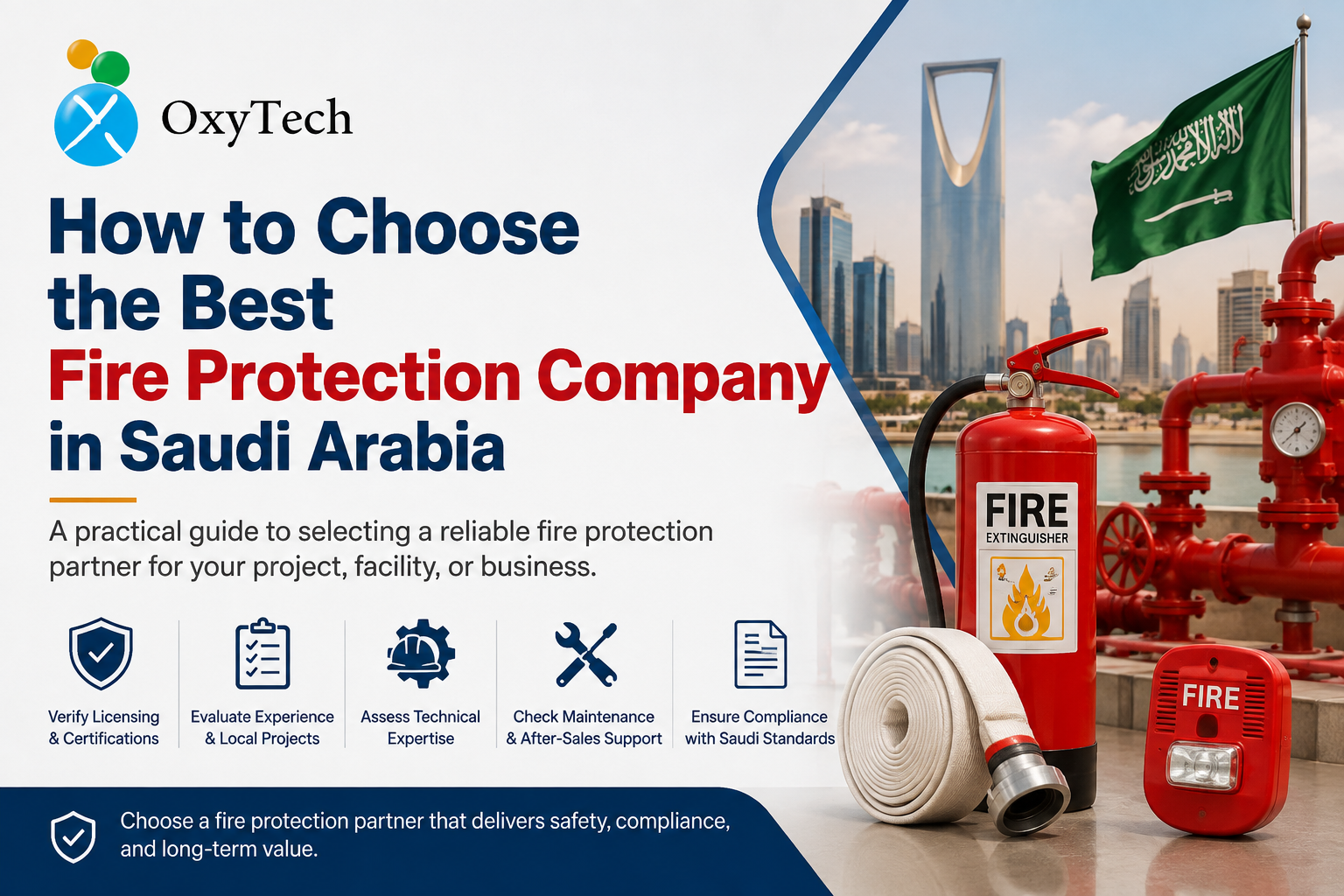
How to Choose the Best Fire Protection Company in Saudi Arabia
Choosing the Best Fire Protection Company In Saudi Arabia means verifying Civil Defense approval, checking proven local project experience, confirming technical capability (design, installation, testing, and maintenance), and ensuring strong after-sales support and documentation.
Why This Decision Matters in Saudi Arabia
Fire protection systems are life-safety assets. In Saudi Arabia, they must align with Saudi Civil Defense requirements, NFPA standards, and project-specific specifications. A weak contractor can lead to failed inspections, rework, delays in occupancy, and higher long-term maintenance costs.
Step-by-Step Selection Framework
1) Confirm Legal and Regulatory Approvals (Must-Have)
Start with compliance. Without the right approvals, your system may not be accepted at handover.
- Civil Defense approval for the contractor and the proposed system scope.
- Evidence of previous Civil Defense handover certificates for similar projects.
- Clear understanding of local authority submission and inspection (who submits, who attends, what documents are needed).
What to ask:
“Can you share two recent Civil Defense completion certificates for projects similar to ours?”
2) Check Experience and Project Fit (Must-Have)
Experience reduces risk. Prioritize companies that have executed work in your facility type (e.g., warehouse, hospital, hotel, industrial plant, high-rise).
- Years in business in KSA and number of completed projects in your sector.
- Local references you can call or visit.
- Ability to handle your project stage (design review, installation, commissioning, maintenance).
What to ask:
“Which projects in [your city/sector] can we visit or speak to?”
3) Verify Technical Capability and Team (Must-Have)
Technical strength determines whether your system will be designed correctly, installed properly, and commissioned to standard.
- NFPA-trained engineers and in-house commissioning team.
- Clear scope definition: design, supply, installation, testing, documentation, handover, and maintenance.
- Ability to perform design review, detect clashes/spec gaps early, and manage submittals.
- Testing readiness: pump tests, detector sensitivity, alarm integration, and witnessed commissioning.
What to ask:
“Who will lead commissioning, and can we include performance-based acceptance criteria in the contract?”
4) Evaluate Range of Services (Must-Have for Lifecycle Safety)
A strong provider supports you beyond installation.
- Risk assessments and fire safety audits.
- Fire safety training for your staff.
- 24/7 emergency support and clear SLAs for response times.
- Preventive maintenance contracts with defined inclusions/exclusions and reporting.
What to ask:
“What does your annual maintenance contract include, and how are after-hours callouts handled?”
5) Review Documentation and Handover Discipline (Must-Have)
Poor documentation is a common cause of delayed approvals.
- Organized technical submittals, material records, and closeout files.
- Complete as-built drawings, test reports, and operation/maintenance manuals.
- Evidence of approval-related documentation support for Civil Defense.
What to ask:
“Can you show a sample closeout package from a recent project?”
6) Assess Equipment Quality and Supplier Authorizations (Important)
System reliability depends on the products used.
- Use of approved, certified equipment (e.g., UL/FM where applicable) and compatibility with project specs.
- Manufacturer authorizations or recognized distributor status (nice-to-have but valuable).
- Availability of spare parts and long-term support.
What to ask:
“Which brands will you supply, and are they approved for Civil Defense submissions in our scope?”
7) Compare Commercials Smartly (Avoid Low-Ball Traps)
Price matters, but scope clarity matters more.
- Ensure offers define exclusions and assumptions clearly.
- Tie payments to milestones and witnessed commissioning to protect cash flow.
- Separate routine maintenance from repairs/upgrades in service contracts.
What to ask:
“Please list all exclusions and any items that could become variation orders later.”
8) Check Reputation, Reviews, and Aftercare (Must-Have)
Reputation signals reliability.
- Look for client testimonials, online reviews, and case studies.
- Confirm post-handover support structure and spare-parts readiness.
- Prefer companies with long-term maintenance relationships in KSA.
What to ask:
“Can you provide two client contacts for post-handover support feedback?”
Quick Evaluation Checklist (Copy-Paste Ready)
Use this to score shortlisted companies:
- Civil Defense approval (contractor + system scope)
- Local project references in your sector and city
- NFPA-trained engineers and in-house commissioning team
- Full scope: design, supply, install, test, document, handover, maintain
- Strong documentation: submittals, as-builts, test reports, O&M manuals
- 24/7 support and clear maintenance SLA
- Approved equipment brands and spare-parts availability
- Transparent commercials with exclusions and milestone payments
Common Mistakes to Avoid
- Choosing based on lowest price without scope clarity.
- Ignoring documentation and handover requirements until late in the project.
- Overlooking maintenance planning, leading to recurring faults and failed inspections.
- Appointing a supplier without local Civil Defense experience for your facility type.
Final Recommendation
Shortlist 2–3 Fire Protection Companies in Saudi Arabia, conduct site visits or technical meetings, and use the checklist above to compare execution readiness—not just presentation. Prioritize contractors who provide clear documentation, robust maintenance programs, and demonstrable local project success in Saudi Arabia.